
วันอาทิตย์ที่ 20 กุมภาพันธ์ พ.ศ. 2554

About me

My name is Anusara Phalapree.
My nickname is Kook.
I was born on March14, 1988 in Ubon.
I am 22 years old.
I am a fourth year student. Now, I am studying in the faculty of Education ,majoring in English, Mahasarakham University.
My favorite song is Two is better than one. Because this song it make me cry.

The Research
Improving Matthayomsuksa 2 Students’ Writing Skill by Using Comic Strip
Faculty of Education, Mahasarakham University
ABSTRACT
This study aimed to (1) designs the effectiveness of English writing activities by using comic strips with a required efficiency of 70/70. (2) examine the effectiveness indexes of using comic strips to improve writing skills. (3) compare the English writing skills before and after using comic strips . The samples were 50 Mathtayomsuksa 2 students selected by cluster random sampling. The instruments used in the experiment were 3 lesson plans which were emphasized on improving English writing skills by using comic strips and pre-test and post-test. The data were statistically analyzed by mean, percentage, standard deviation and t-test.
The results of this study revealed that English writing activities by using comic strips reached its efficiency of64.07/61.33. It was lower than the criterion (70/70). The effectiveness index was 0.43indicated that the students could improve their learning at 0.43%.The post-test scores of the students were significantly higher than pre-test scores of the students at the .05 level.
It shows that using comic strips to improve writing skills has achieved goal. Comic strips could help the teachers explore a variety of topics, engender useful grammar and vocabulary exercises, provide a humorous and familiar escape for pupils. And comic strips could help the students improve their writing skills. It was not only sparked the students to write but inspired them to study English.


Computer-assisted language learning (CALL)
Computer-assisted language learning (CALL) is a form of computer-based assisted learning which carries two important features: bidirectional learning and individualized learning. It is not a method. CALL materials are tools for learning. The focus of CALL is learning, and not teaching. CALL materials are used in teaching to facilitate the language learning process. It is a student-centered accelerated learning material, which promotes self-paced accelerated learning.
Advantages of CALL
Motivation: using a variety of multimedia components in one program or course has been shown to increase student interest and motivation. One quantifiable benefit to increased motivation is that students tend to spend more time on tasks when on the computer. More time is frequently cited as a factor in achievement
Adapting learning to the student: Students tend to prefer exercises where they have control over content, such as branching stories, adventures, puzzles or logic problems. With these, the computer has the role of providing attractive context for the use of language rather than directly providing the language the student needs.
Authenticity: “Authenticity” in language learning means the opportunity to interact in one or more of the four skills (reading, writing, listening, speaking) by using or producing texts meant for an audience in the target language, not the classroom.
Critical thinking skills: Use of computer technology in classrooms is generally reported to improve self-concept and mastery of basic skills, more student-centered learning and engagement in the learning process, more active processing resulting in higher-order thinking skills and better recall, gain confidence in directing their own learning.
The PPP Approach to Communicative Language Teaching.
The PPP Approach to Communicative Language Teaching
Presentation
represents the introduction to a lesson, and necessarily requires the creation of a realistic (or realistic-feeling) "situation" requiring the target language to be learned. This can be achieved through using pictures, dialogs, imagination or actual "classroom situations". The teacher checks to see that the students understand the nature of the situation, then builds the "concept" underlying the language to be learned using small chunks of language that the students already know. Having understood the concept, students are then given the language "model" and angage in choral drills to learn statement, answer and question forms for the target language. This is a very teacher-orientated stage where error correction is important.
Practice
usually begins with what is termed "mechanical practice" - open and closed pairwork. Students gradually move into more "communicative practice" involving procedures like information gap activities, dialog creation and controlled roleplays. Practice is seen as the frequency device to create familiarity and confidence with the new language, and a measuring stick for accuracy. The teacher still directs and corrects at this stage, but the classroom is beginning to become more learner-centered.
Production
is seen as the culmination of the language learning process, whereby the learners have started to become independent users of the language rather thanstudents of the language. The teacher's role here is to somehow facilitate a realistic situation or activity where the students instinctively feel the need to actively apply the language they have been practicing. The teacher does not correct or become involved unless students directly appeal to him/her to do so.
Content and Language Integrated Learning (CLIL)
Content and Language Integrated Learning (CLIL)
What is CLIL?
CLIL aims to introduce students to new ideas and concepts in traditional curriculum subjects (often the humanities), using the foreign language as the medium of communication - in other words, to enhance the pupils' learning experience by exploiting the synergies between the two subjects. This is often particularly rewarding where there is a direct overlap between the foreign language and the content subject.
How does the CLIL approach benefit pupils?
Although it may take a while for pupils to acclimatise to the challenges of CLIL, once they are familiar with the new way of working, demonstrably increased motivation and focus make it possible (and likely) that they will progress at faster-than-usual rates in the content subject, providing that the principles of CLIL teaching are borne in mind during planning and delivery. CLIL aims to improve performance in both the content subject and the foreign language. Research indicates there should be no detrimental effects for the CLIL pupils (and often progress is demonstrably better).
Other advantages include:
• stronger links with the citizenship curriculum (particularly through the use of authentic materials, which offer an alternative perspective on a variety of issues)
• increased student awareness of the value of transferable skills and
knowledge
• greater pupil confidence.
What are the practical implications of introducing CLIL into the school curriculum?
The content subject should always be the primary focus of any materials used in the CLIL classroom. CLIL should not be used as an opportunity to use texts as glorified vocabulary lists, or to revise concepts already studied in the mother tongue. However, it is impossible to transfer existing content subject lesson plans across without modifying these to take into account pupils' ability in the target language, and therefore the planning process is vital. It is likely that, especially to begin with, lessons will need to be challenging cognitively, with comparatively light linguistic demands. Schools need to design materials to suit the needs of their learners, and to enable them to develop until they are working at high levels of cognitive and linguistic challenge.
What is the best approach to CLIL teaching?
The diversity of CLIL activity in UK schools is striking. It is not possible to generalise to any extent about the subjects chosen, the type of school pioneering such approaches, nor the ability of the learners chosen to participate. The predominant language of the projects is French, although a number of projects are operating in German or Spanish. It appears, then, that no approach to CLIL can be set in stone. One of the purposes of the Content and Language Integration Project is to compare the outcomes of different approaches in a variety of different schools.
Story Telling
Monkey and the Crocodile
The Blue Jackal
The Wind And The Sun
Comman Sense
The Three Fishes
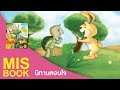
นิทานอีสป 2 ภาษา อังกฤษ-ไทย ชุดที่ 3
The Blue Jackal
The Wind And The Sun
Comman Sense
The Three Fishes
นิทานอีสป 2 ภาษา อังกฤษ-ไทย ชุดที่ 3
Song for kids
Old MacDonal had a farm
The Elephant Song
The Calendar Song
Color Song
The Body Song
Finger Family
Head And Shoulder
If you are happy
The Elephant Song
The Calendar Song
Color Song
The Body Song
Finger Family
Head And Shoulder
If you are happy
วันเสาร์ที่ 19 กุมภาพันธ์ พ.ศ. 2554
Lesson plans
Listening plan
listening Ja_3.rar
Listening Skill Unit Environment Topic Water M.3.docx
Listening_Phat.doc
Speaking plan
งานทักษะพูด.rar
Reading plan
_แผนอ่าน1s...doc_.doc
Reading..NLM.doc
B-slim plans
B-Slim_lesson_plan_-_revised.doc
B-Slim_lesson_plan_-_revised.doc
B-slim_TV program.doc
B-slim_TV program.doc
b slim.rar
B-slim Unit Tourism Topic Travel Arrangment M1.doc
B-silm Unit Education and Careers Topic Futer and Career M5.doc
B-slim Unit Interest Opinion Topic Media Sub-topic TV M1.doc
B-slim Unit Interests Opinion Topic Movie M3.doc
B-slim Unit Places Topic Direction M1.doc
B-slim Unit Shopping Topic Colthes M5.doc
PPP plan
ppp.rar
ppp.doc
PPP_appereance.doc
Unit Culture Topic Local Wisdom2 - revised 2.doc
listening Ja_3.rar
Listening Skill Unit Environment Topic Water M.3.docx
Listening_Phat.doc
Speaking plan
งานทักษะพูด.rar
Reading plan
_แผนอ่าน1s...doc_.doc
Reading..NLM.doc
B-slim plans
B-Slim_lesson_plan_-_revised.doc
B-Slim_lesson_plan_-_revised.doc
B-slim_TV program.doc
B-slim_TV program.doc
b slim.rar
B-slim Unit Tourism Topic Travel Arrangment M1.doc
B-silm Unit Education and Careers Topic Futer and Career M5.doc
B-slim Unit Interest Opinion Topic Media Sub-topic TV M1.doc
B-slim Unit Interests Opinion Topic Movie M3.doc
B-slim Unit Places Topic Direction M1.doc
B-slim Unit Shopping Topic Colthes M5.doc
PPP plan
ppp.rar
ppp.doc
PPP_appereance.doc
Unit Culture Topic Local Wisdom2 - revised 2.doc
วันอาทิตย์ที่ 16 มกราคม พ.ศ. 2554


สมัครสมาชิก:
ความคิดเห็น (Atom)